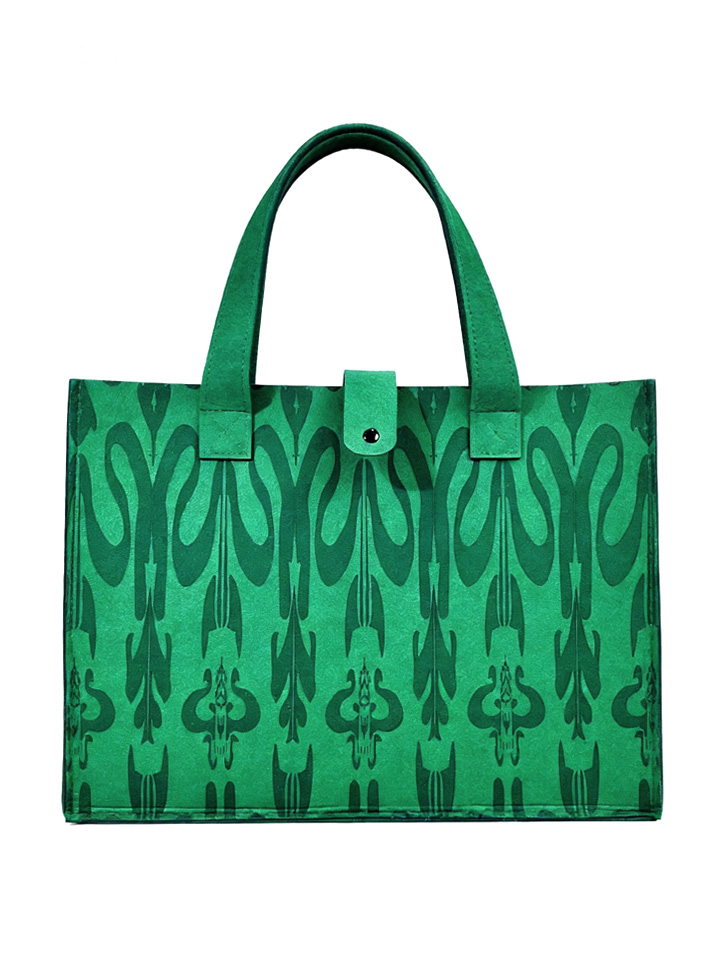
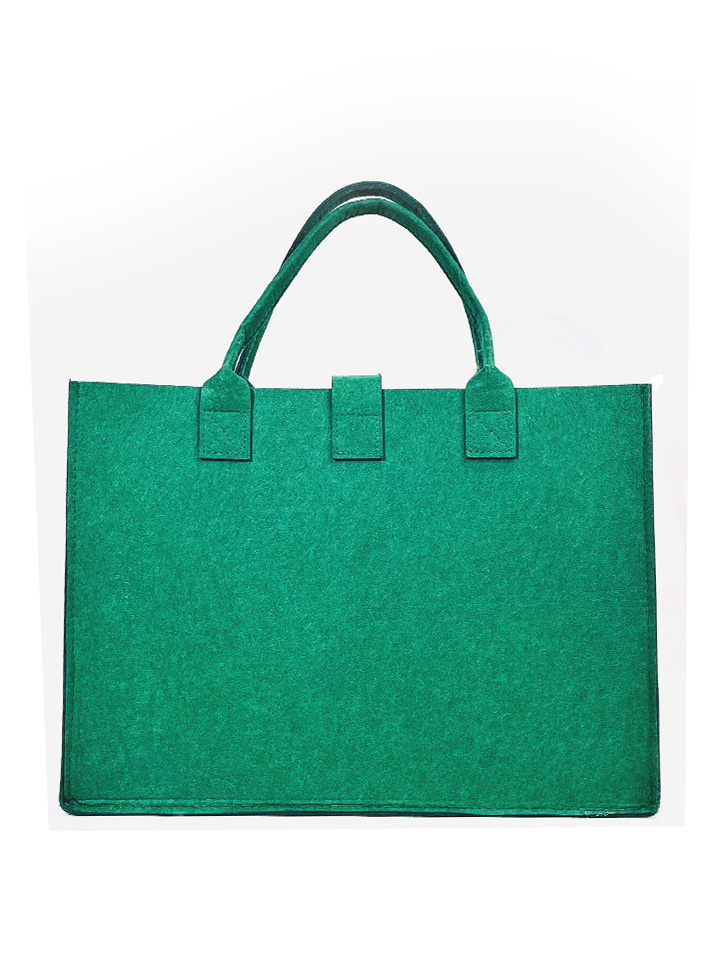
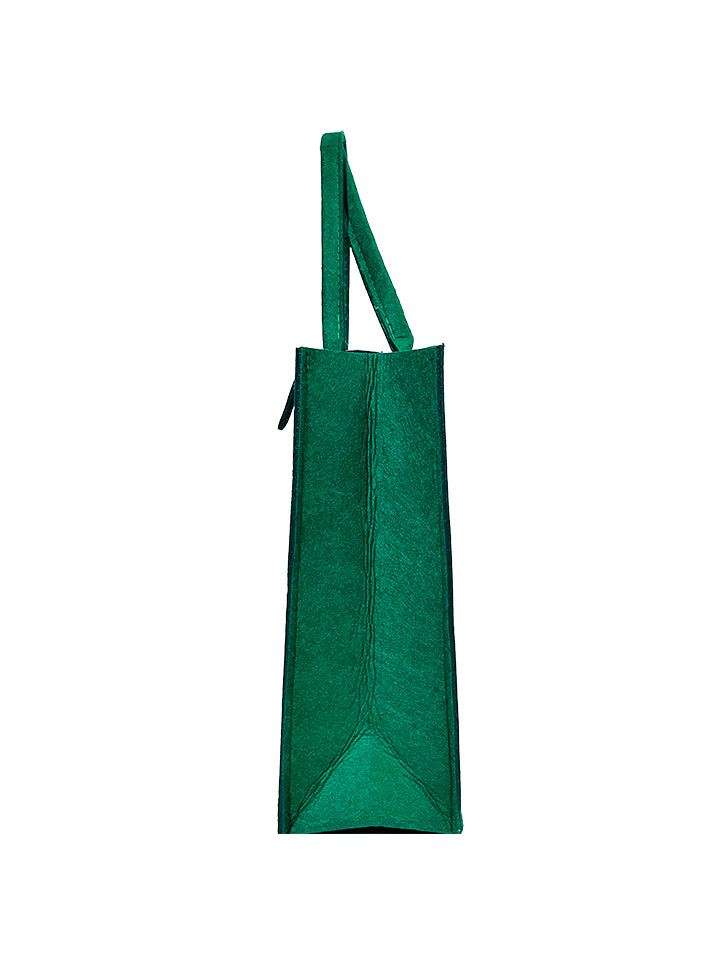



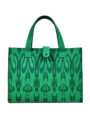

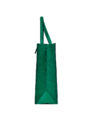




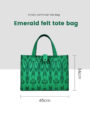

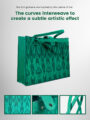


Specifications
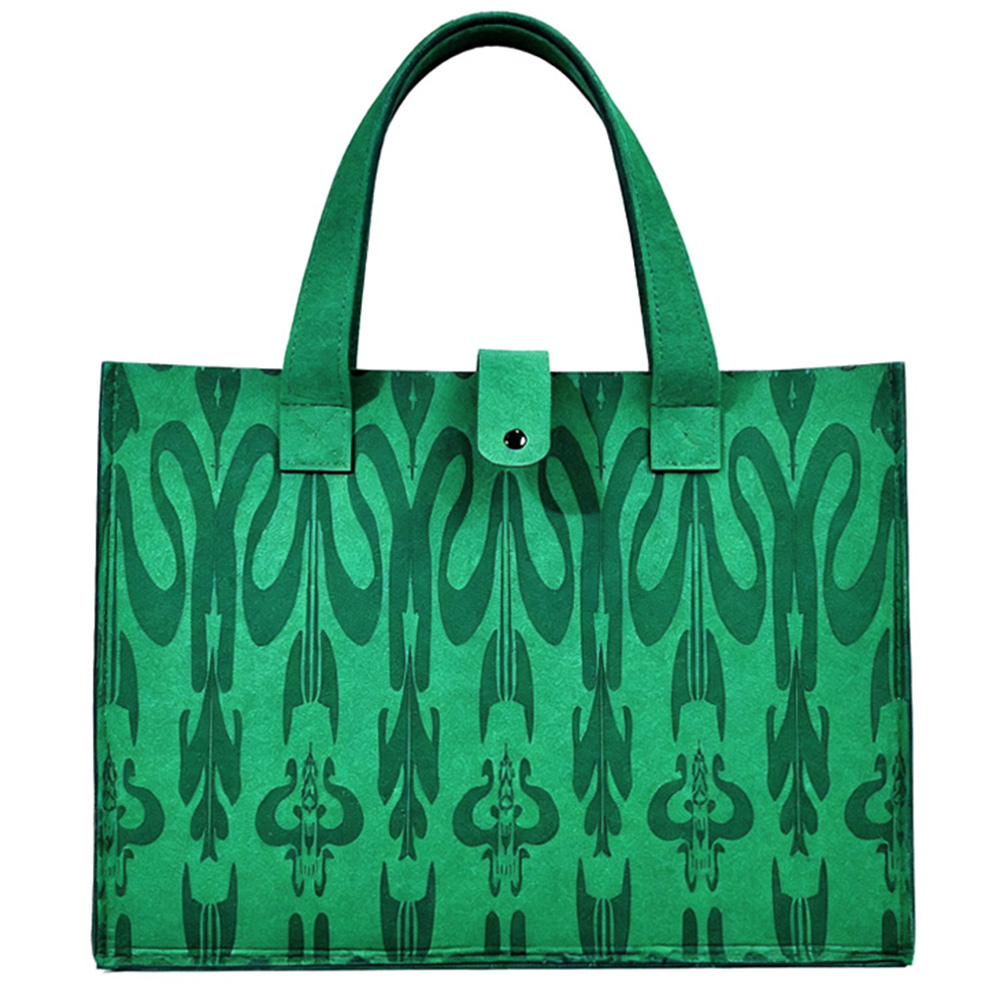
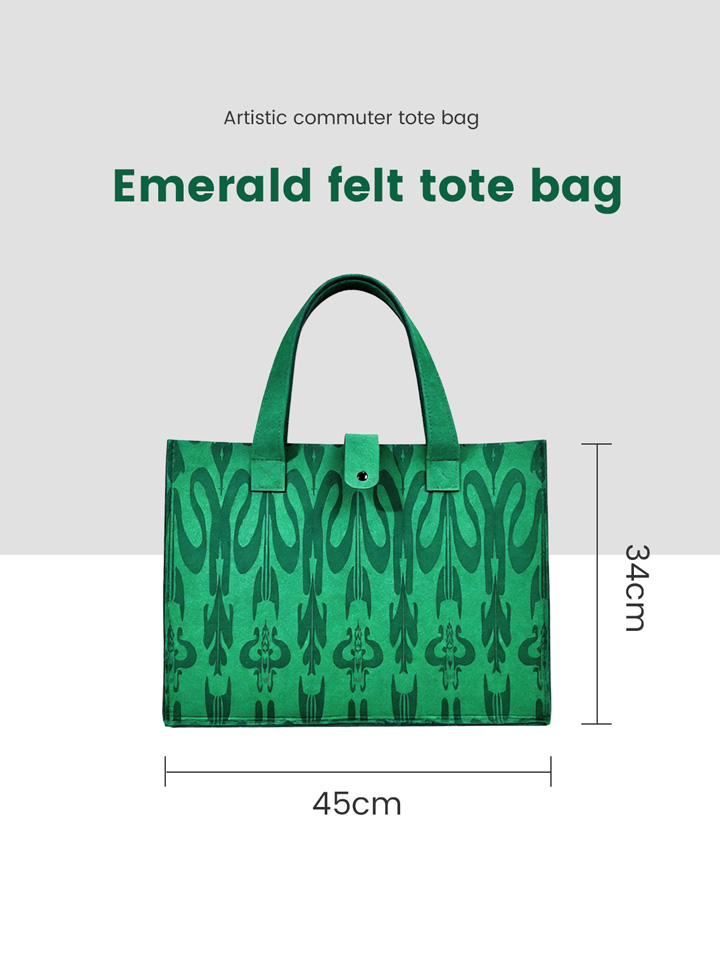
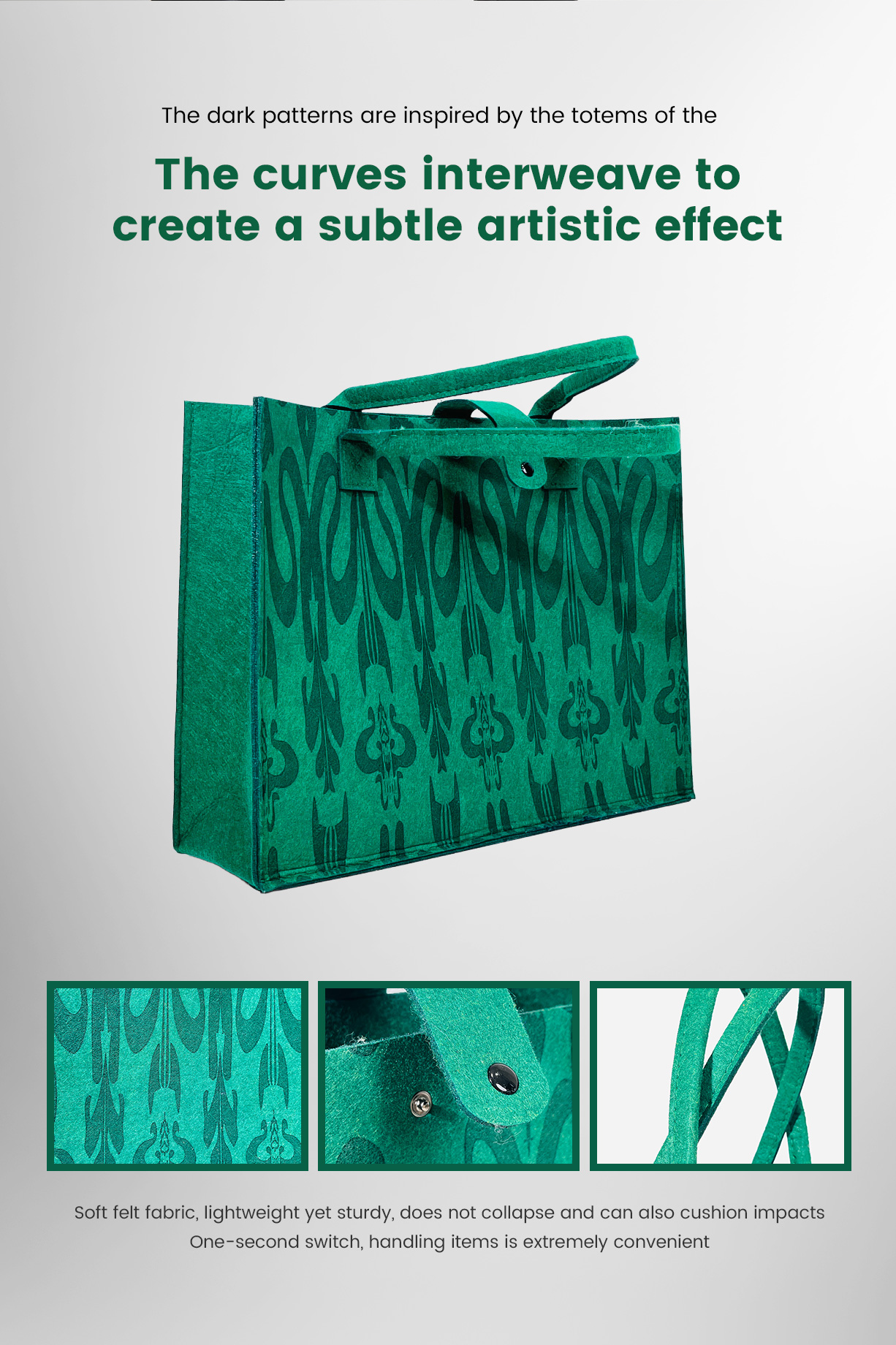
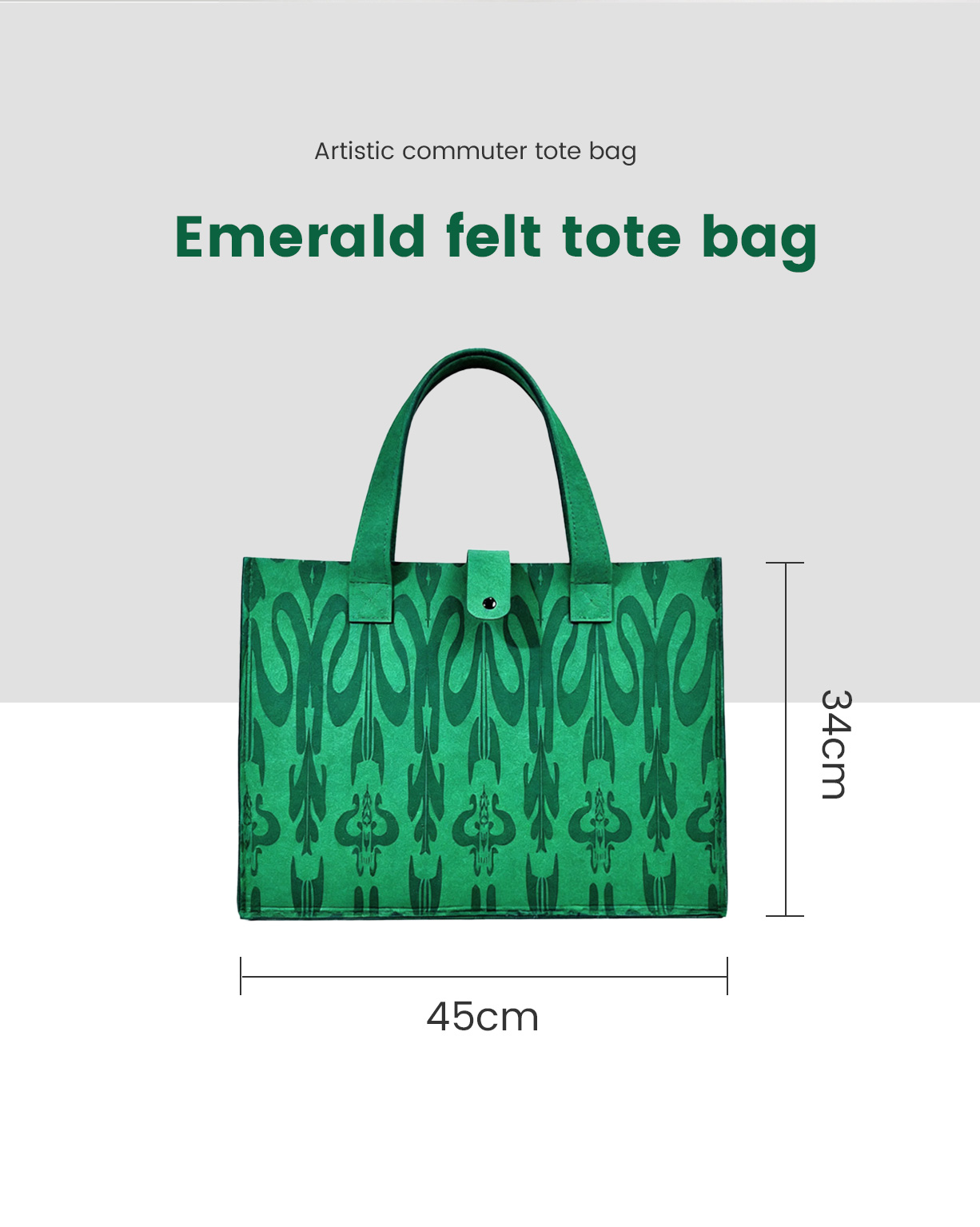
| Model | Silk Printed bags felt tote bag | Length | 45cm |
|---|---|---|---|
| Material | felt | Width | 34cm |
| Weight | 200g | Thickness | 13cm |


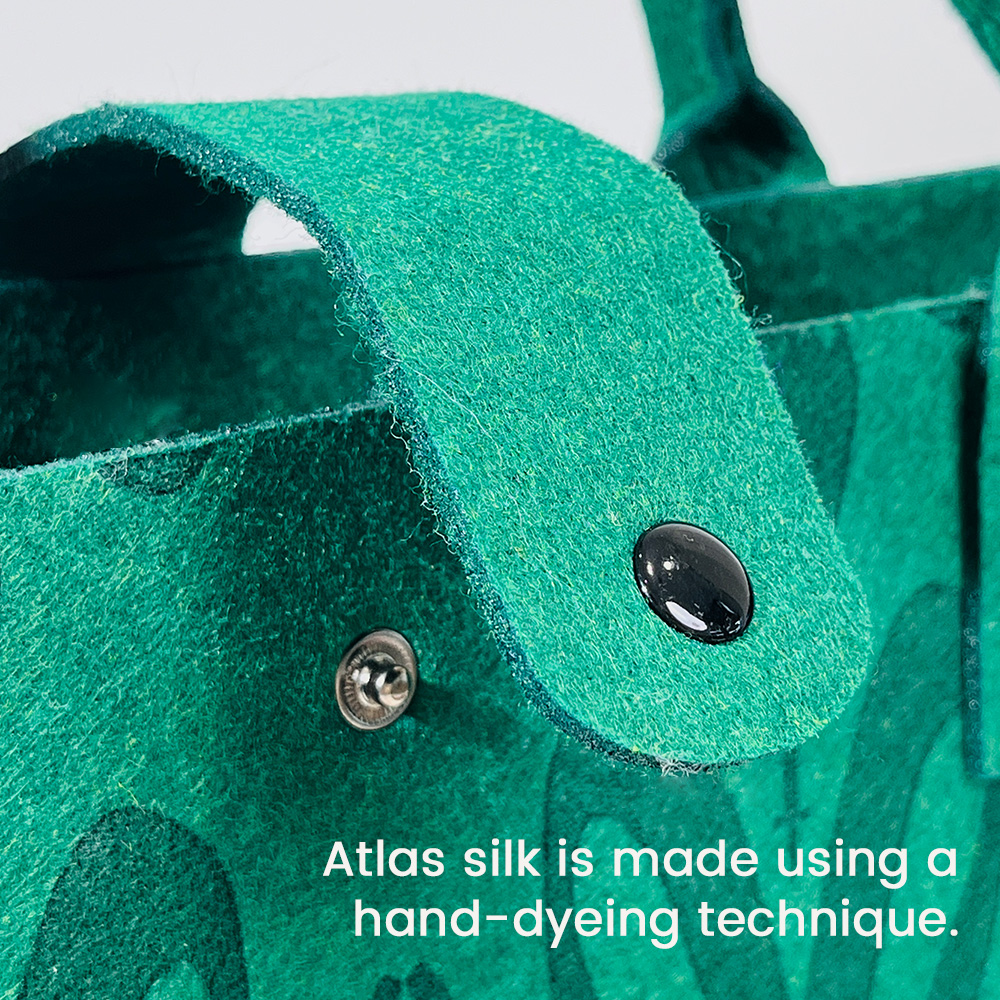
KUZNEY-China’s traditional Atlas silk was included in the National Intangible Cultural Heritage List in 2008.
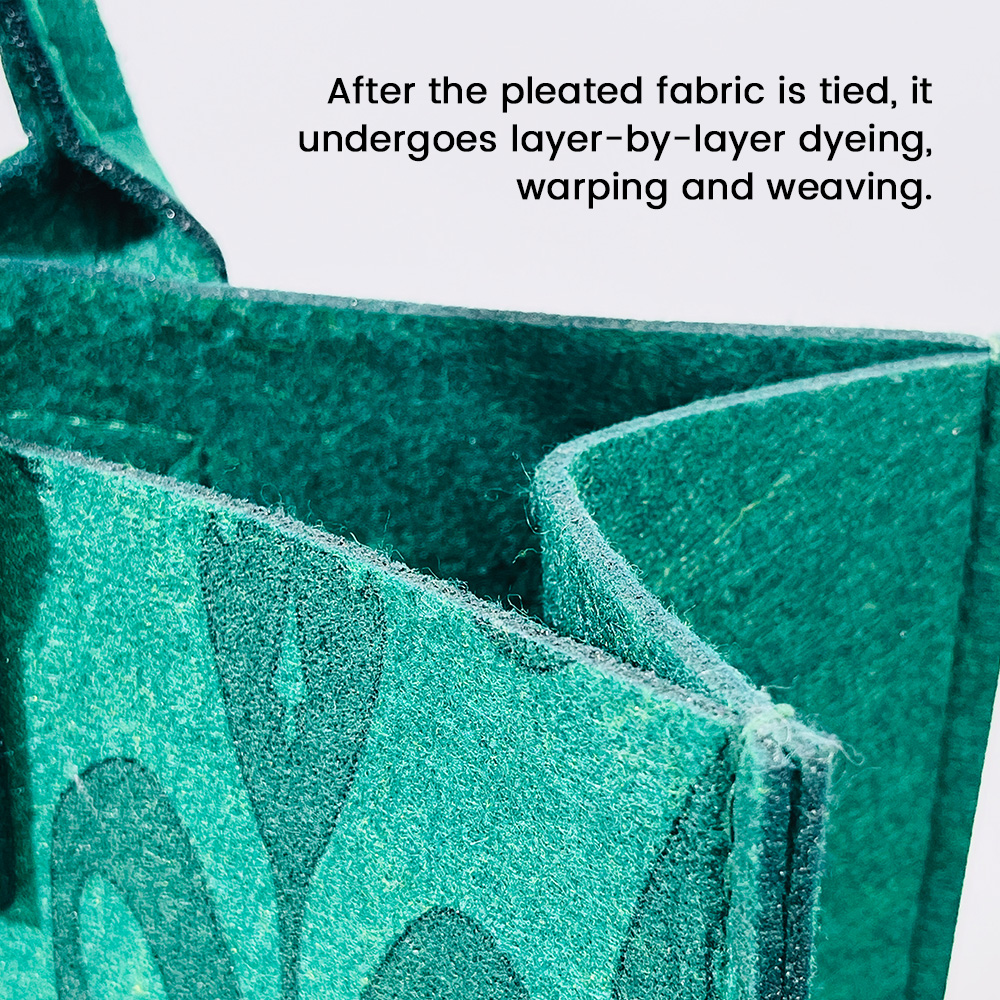
Atlas silk is crafted using hand-tie-dyeing techniques. After tying the warp threads, the fabric undergoes layered dyeing, warping, and weaving. The dye applied to the warp threads naturally bleeds and spreads due to the penetration of the dye solution.
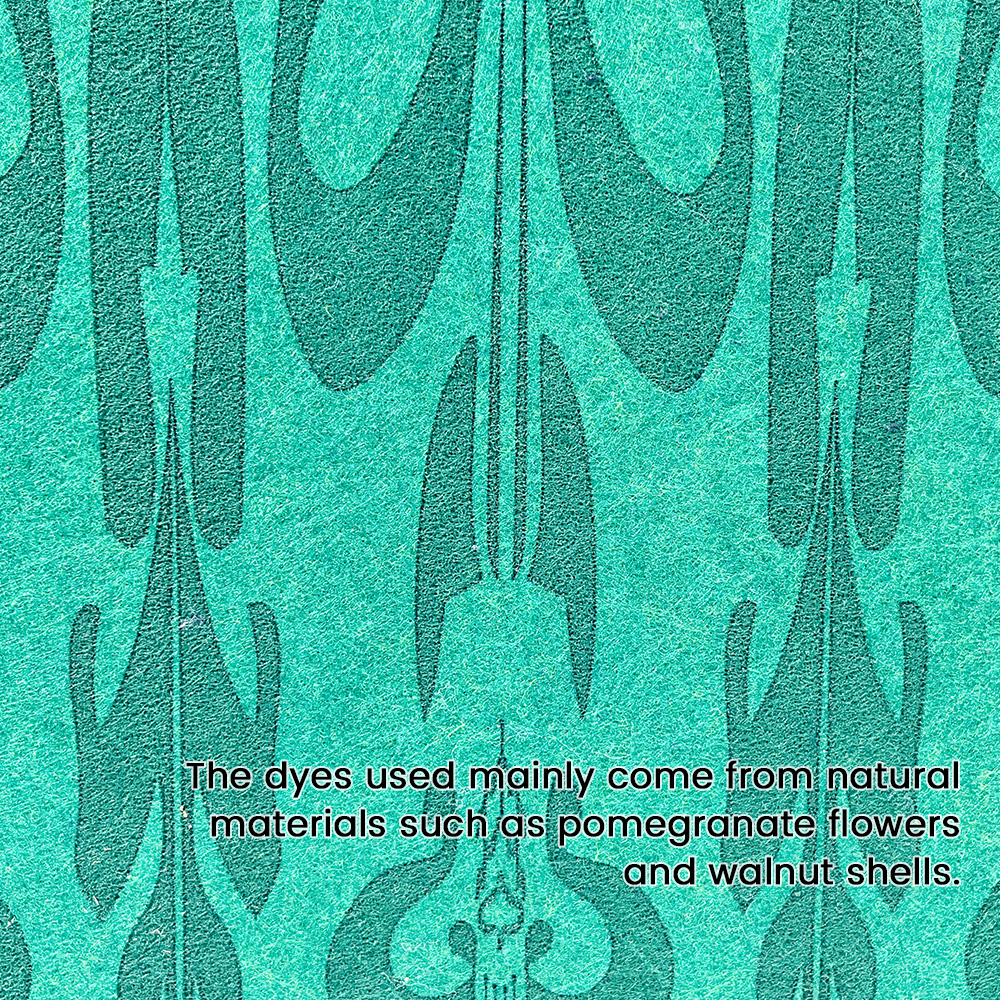
The dyes used are primarily extracted from natural materials such as pomegranate flowers and walnut shells.
Edles silk, as the traditional fabric of uyghur, carries rich historical culture.It is made of pure natural materials that are hand-dyed and woven, and each piece of clothing is a unique work of art.Its colors are bright and harmonious, and the patterns are complex yet elegant, giving people a beauty that goes through time and space.
Each silk cocoon undergoes
boiling to extract silk, reeling, design, bundling, tie-dyeing,
pattern refinement, and machine weaving
to ultimately become Edles silk.
boiling to extract silk, reeling, design, bundling, tie-dyeing,
pattern refinement, and machine weaving
to ultimately become Edles silk.
At a handcrafted Edles silk workshop in Jiya Township, Sudurhan Abudurehemu boils silkworm cocoons to extract the silk threads.
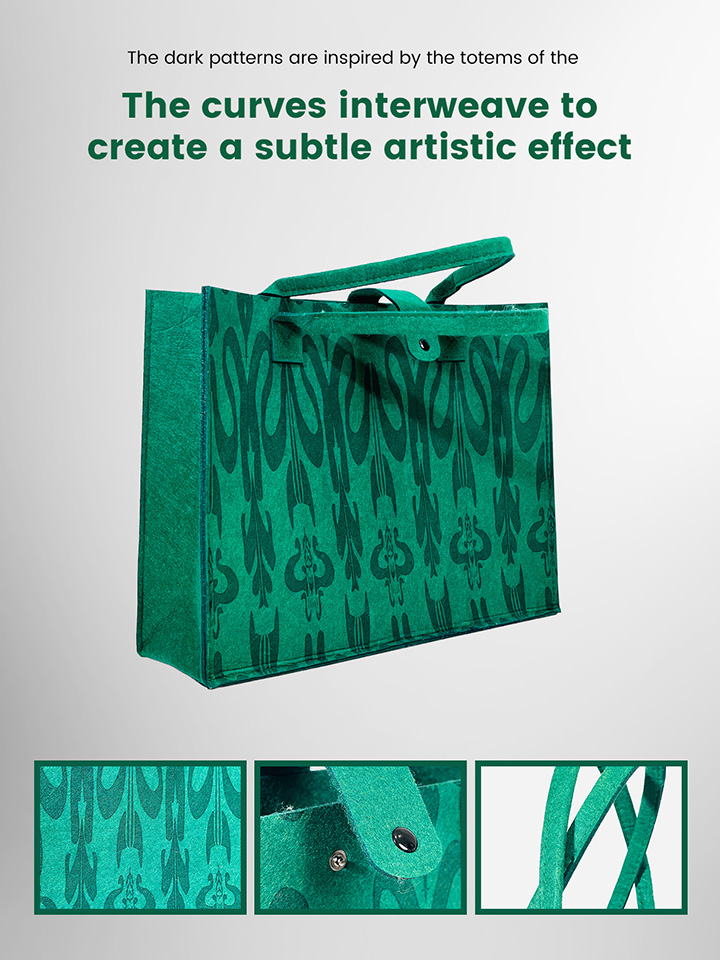
Aydelis, meaning “tie-dye”, involves dyeing before weaving. Its patterns blend regional characteristics, commonly featuring pomegranate motifs, almond designs, hand drum patterns, and ram’s horn shapes. With its dreamlike, dazzling colours, this silk flows across the Tianshan Mountains, having become a visual symbol representing Xinjiang. In 2008, the Aydelis silk weaving and dyeing technique was inscribed on the National Intangible Cultural Heritage List.