Dong brocade weaving is mainly distributed in Tongdao Dong Autonomous County, Hunan Province. It is a product of the labor and aesthetic life of the Dong people. The Dong is one of the 56 ethnic groups in China, a group with a spoken language but no written script. Their history can be traced back to the Spring and Autumn and Warring States periods more than 2,000 years ago. From the Han Dynasty to the Tang and Song Dynasties, the textile and dyeing techniques of the Dong ancestors had developed their own unique style. During the Ming and Qing Dynasties, with the formation of the Dong ethnic group and the increasing maturity of its traditional culture, Dong brocade weaving techniques also developed greatly.
Dong brocade, with its unique weaving techniques, simple yet elegant color combinations, and rich and distinctive patterns, has become one of the top ten Brocade in my country. Its rich everyday life elements give Dong brocade its enduring charm. It is divided into two types: plain brocade and colored brocade. Plain brocade is elegant and mostly uses blue or black yarn, while colored brocade is bright and colorful, with broken weft threads woven in, resulting in multiple colors. All Dong brocades are handwoven, requiring processes such as cotton ginning, spinning, dyeing, yarn twisting, warp twisting, warp arrangement, and weaving. Dong brocades come in a wide variety of styles and can be used to make cushions, waist pillows, table runners, wall hangings, bibs, baby carriers, bedding, clothing, and bags. Dong women showcase their intelligence and exquisite craftsmanship through brocade weaving. The patterns of Dong brocades depict the history and culture of the Dong people, reflecting their totem worship, religious beliefs, and the cultural psychology of avoiding misfortune and seeking good fortune, as well as harmonious coexistence with nature. With its distinctive ethnic patterns, rich and profound cultural connotations, bright and harmonious colors, and elegant and dignified quality, Dong brocade is one of my country’s most famous brocades, possessing unique cultural, artistic, social-historical, and scientific and technological value.
The social-historical function of Dong brocade is mainly manifested in its historical and social attributes. The Dong people were originally primarily an agrarian society and did not develop their own written language. Therefore, the production of Dong brocade was largely based on nature and locally sourced materials, with most patterns being pictographic representations of animals and plants. As the Dong people multiplied and thrived, a growing number of their customs and cultural beliefs were incorporated into Dong brocade weaving, forming unique patterns. Dong brocade has become a cultural carrier recording the origins, history, and customs of the Dong people, serving as a “code” for understanding Dong culture. The Dong people often use Dong brocade to express their love for elders and children, and to convey their values of diligence and simplicity. For example, weavers embroider spider patterns on children’s carriers, symbolizing their blessing for their children’s healthy growth and their hope that the children will possess perseverance. When an elder passes away, their descendants will bury “longevity brocade” with them, expressing their mourning and prayers for the deceased. When young Dong men and women pledge their love, the man often presents a finely carved brocade weaving tool as a token of his proposal, while the woman typically reciprocates with embroidered purses, insoles, belts, and other woven items.
The cultural and artistic value of Dong brocade is also quite intriguing. While brocade weaving is akin to fine cuisine, Dong brocade is simple and natural, primarily featuring abstract patterns, often using geometric arrays. This distinctive characteristic of Dong brocade patterns subtly conveys cultural metaphors. The unique “spider pattern” of Dong brocade originates from the Song of the Dong Ancestors which sings that the Dong people were conceived by their ancestor “Satianba,” whose flesh was that of a spider. Therefore, in the hearts of the Dong people, the spider symbolizes wisdom, auspiciousness, life, and fertility, and is also a guardian deity that appeases and soothes the souls of the dead. Embroidering spider patterns into Dong brocade carries the auspicious meaning of ancestral protection and abundant offspring.
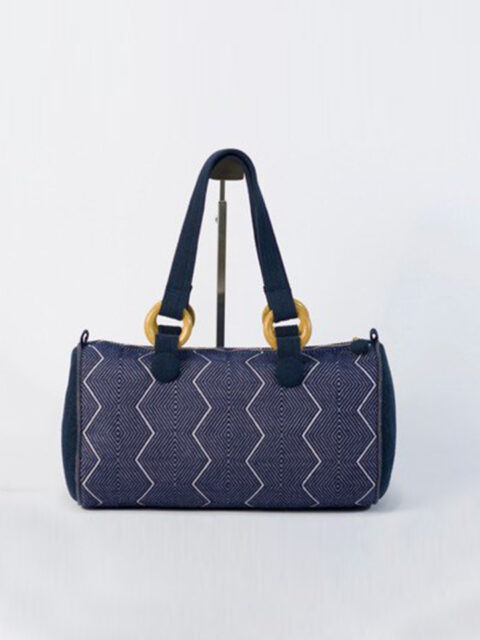
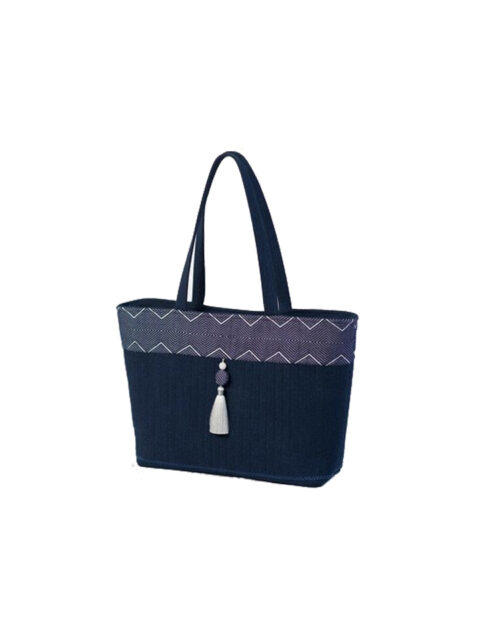
The abstract patterns of Dong brocade resonate with the minimalist and refined design concepts of international brands, making it highly suitable for modern design transformation and integration into modern bags, cushions, and home furnishings. As a traditional Chinese cultural product, Dong brocade is both national and global. In its journey to the world stage, it should not only utilize different cultural expressions and artistic recording methods, but also employ “localized stories and a global language” to disseminate the cultural and artistic value of traditional rural handicrafts.
The article quotes the following:
https://www.ihchina.cn/project_details/14490
http://traditional.design-engine.org/djk/about
https://m.cyol.com/gb/articles/2023-02/24/content_Pb9K2mTx0d.html