Batik is a traditional craft passed down through generations of the Miao people in Danzhai and Zhijin counties of Guizhou Province. Living in a harsh environment of long-term isolation, the Miao gradually developed a self-sufficient lifestyle, and the ancient batik technique has been passed down through generations. This has led to the formation of customs and culture centered on batik art, including clothing, wedding and festival traditions, social customs, and funeral practices.
The history of batik can be traced back to the Qin and Han dynasties more than 2,000 years ago. The ancestors of the Miao people had already mastered the resist-dyeing properties of wax, using insect wax and beeswax as resist materials. During the Song Dynasty, the emergence of simpler blue-and-white printed fabrics led to the gradual disappearance of batik techniques in the Central Plains. However, due to geographical limitations, the residents of Guizhou and other southwestern regions lived in long-term isolation and self-sufficiency, thus preserving the ancient batik technique.
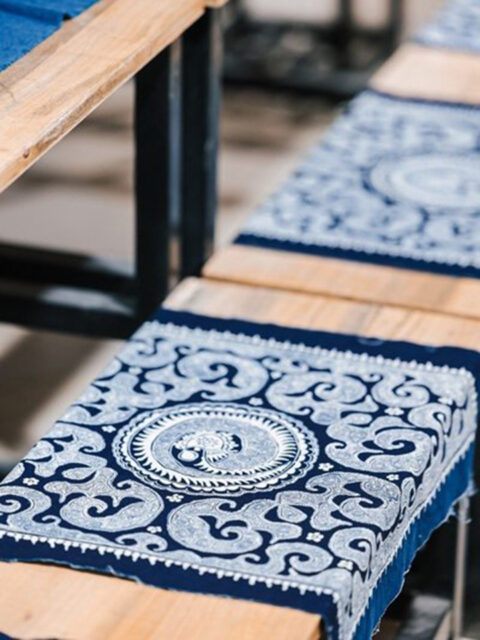
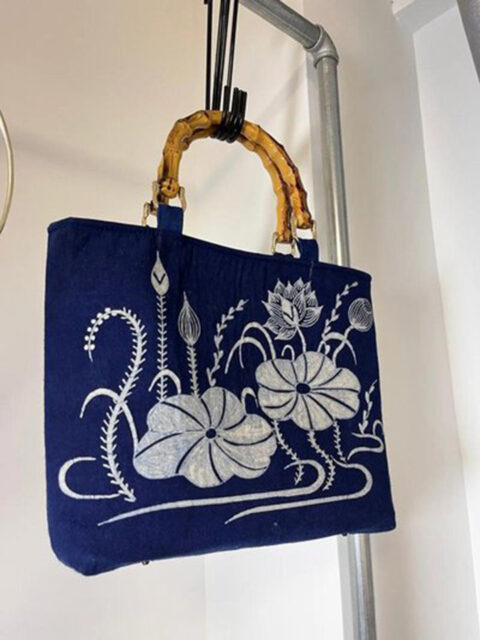
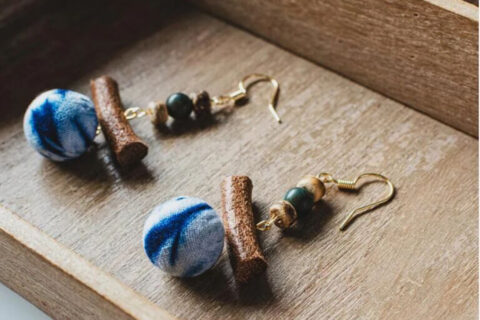
Batik is an ancient resist-dyeing technique. It utilizes the water-repellent properties of wax. A wax dot is dipped into liquid wax and applied to natural fibers such as hemp, silk, cotton, and wool. The fabric is then immersed in an indigo dye vat at a suitable low temperature. The dyeing material is a type of grass found in the mountains called Malan. Where there is wax, the color cannot penetrate, so after removing the wax, various patterns are formed. The lies charm of batik not only in its exquisite patterns but also in the cracks created by the wax as it cools, allowing the dye to seep into the cracks and produce diverse patterns, commonly known as “ice patterns.” The same design can produce different ice patterns in batik. Miao batik employs two techniques: dotting with wax and painting with wax. Miao batik patterns can be divided into two main categories: geometric patterns and natural patterns. The most classic traditional pattern is the Tai Chi fish. Fish in Miao culture contain auspicious meanings and related to fertility. Two intersecting yin-yang fish form a circle, which can be seen as the sun or the sky, or as the origin of life and femininity, reflecting the Miao people’s fertility worship. Most Miao batik is blue and white, but some areas produce colored batik.
The Miao people have many branches, and the decorative styles of different Miao tribes vary. For example, Anshun Miao batik mainly uses geometric patterns, with a dynamic structure; Danzhai Miao batik mainly uses natural patterns, which are vivid, smooth, simple, and rustic, with a strong rural flavor; Zhijin Miao batik often features fine spiral patterns, with patterns that blend seamlessly. Although the decorative styles differ, batik is an important part of daily life for all Miao people. Women’s clothing, bed sheets, quilt covers, wrapping cloths, headscarves, backpacks, handbags, shoulder straps, and funeral cloths are all decorated with batik.Miao batik technology is also showing new vitality in the modern era. Its unique ethnic aesthetics and simple handcraftsmanship are increasingly integrating with the contemporary clothing industry. A growing number of clothing patterns utilize the ancient Miao batik techniques, making it unique in clothing manufacturing and other fields. While satisfying people’s diverse aesthetic needs, it also inherits batik techniques nd cultural expressions in a new way, spreading them from China to the world and from local to international markets.